A Shared European Future: Alliances, Arts, and Innovation
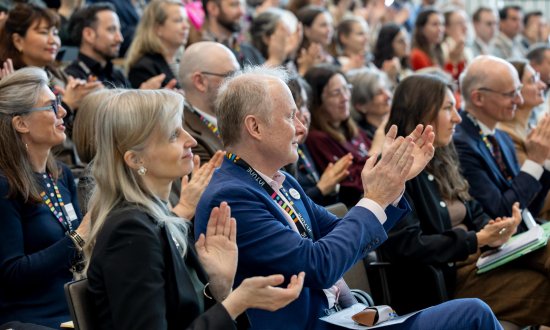
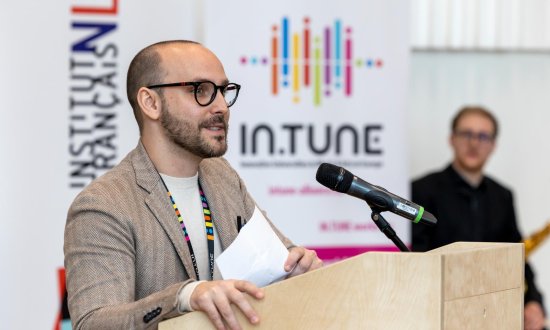
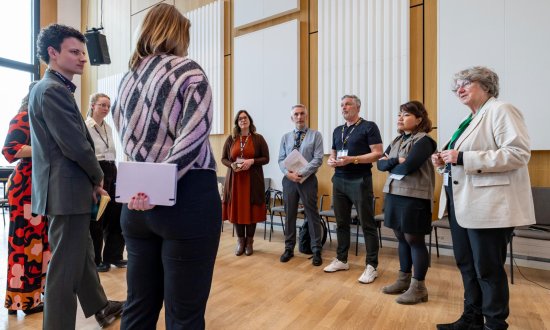
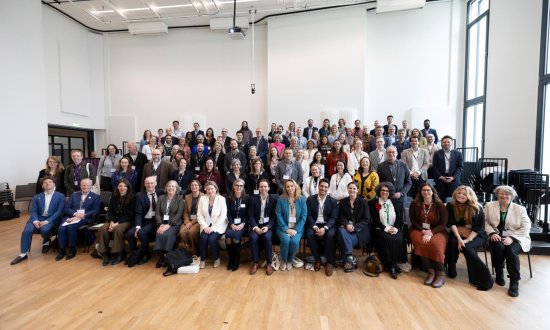
On 24 March, the Royal Conservatoire The Hague and the IN.TUNE Alliance hosted the TCA Fourth Franco-Dutch Strategic Dialogue on European Universities Alliances 2026.
The event brought together representatives from 23 European Universities Alliances, alongside 17 Dutch and 20 French higher education institutions. Participants also included representatives from the European Commission, national ministries of education and science, and organisations active across the sector. Discussions focused on upcoming funding cycles, policy developments, the Joint European Degree, and the future direction of European collaboration in higher education.
At its core, the Strategic Dialogue aimed to strengthen Franco-Dutch cooperation within the European higher education landscape.
A united Europe through alliances and the arts
European Universities Alliances are at a pivotal moment. Since the launch of the European Universities Initiative in 2019, these alliances have relied on European funding to expand their activities and deepen transnational collaboration. Decisions to be taken at the European level in the coming months will be crucial for their long-term sustainability.
Throughout the Dialogue, there was a strong sense of shared commitment among participants. European Universities Alliances highlighted the tangible impact they have already achieved, within institutions, across sectors, and foremost for students. Opportunities created through these alliances are not only academic; they are transformative experiences that shape how students see themselves and their place in Europe.
At the same time, participants emphasised that continued progress depends on stable and reliable funding structures.
IN.TUNE Student Council member René Wynants noted: “It is through the alliances that students could realise that they don’t only function in their home city or country. Through mobility and other experiences, our students can realise that they function in a wider and connected European community. Especially in the musical field that is crucial.”
European unity and competitiveness emerged as recurring themes. European Universities Alliances and the Erasmus+ programme were consistently identified as key drivers in fostering a shared European identity. Through these initiatives, the European Commission seeks to strengthen cooperation, mutual understanding, and strategic autonomy across the continent.
Adding STEAM to the discussion
One of the sessions focused on the European Union’s emerging “Union of Skills” and the role of STEAM (Science, Technology, Engineering, Arts, and Mathematics). As the EU prepares for a new Erasmus+ funding cycle, there is a growing emphasis on STEM disciplines.
IN.TUNE advocates for ensuring that the arts and humanities remain an integral part of this vision. The inclusion of the ‘A’ is not an addition, but a necessity. The arts and humanities contribute directly to innovation, critical thinking, and lifelong learning, skills that are essential for Europe’s future.
For artists and musicians, adaptability, creativity, and lifelong learning are not abstract concepts; they are everyday practice. These competences are increasingly recognised as vital in addressing complex societal challenges.
Principal of the Royal Conservatoire Lies Colman highlighted the specific contribution of the arts: “As the Royal Conservatoire, we believe not only in the power of music, dance, and the arts to contribute to a more beautiful world. We firmly believe, advocate, and demonstrate every day that it is collaboration, communication, and a shared ambition and imagination that enable us, our students, and our art forms to thrive—and with us, our surroundings.”
Discussions during the event explored how the arts can be embedded across disciplines. The aim is to educate engineers who think like designers, programmers who collaborate like composers, scientists who reflect with the critical awareness of writers, and innovators who can move with the agility and creativity of dancers. This interdisciplinary approach supports a more holistic and human-centred model of education.
Rather than replacing STEM, STEAM expands it, making it more adaptable, inclusive, and future-oriented.
Participants noted that elements of STEAM are already present in many programmes. However, there is still significant potential to strengthen interdisciplinary learning and collaboration across institutions.
Showcasing IN.TUNE’s work and impact
The Dialogue also served as an opportunity to highlight the work of IN.TUNE. Together with its eight partner institutions, the alliance contributes not only to innovation in music education, but also to the broader cultural and educational landscape.
As the only European Universities Alliance focused on music and the arts, IN.TUNE is uniquely positioned to help shape future-oriented education, combining strong traditions with innovative, connected approaches to learning.
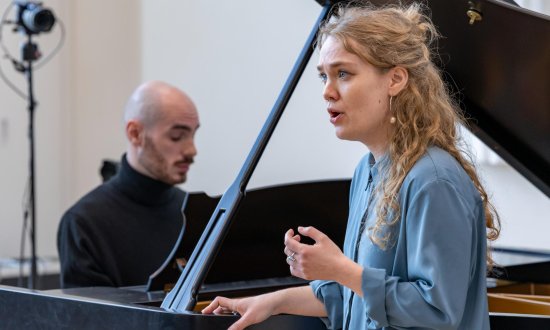
Music formed an integral part of the event’s programme. Students from the Royal Conservatoire performed throughout the event, demonstrating the unifying power music. Their contributions reinforced the discussions around collaboration and the value of the arts within broader educational frameworks.
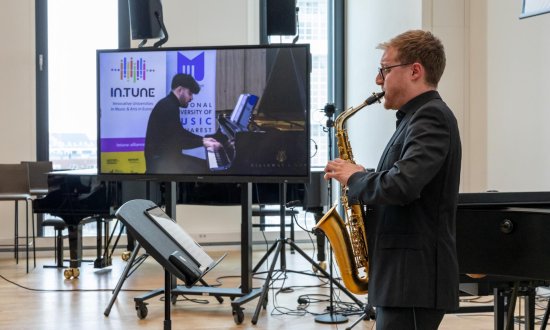
A key highlight was the demonstration of the MVTP technology developed within IN.TUNE. During the session, saxophonist Alex Designori performed live from The Hague, connected in real time with pianist Daniel Dumitrascu in Bucharest.
This demonstration showcased the work on Capacity building and innovation in learning and teaching, and illustrated how digital technologies can expand possibilities for collaboration and learning.
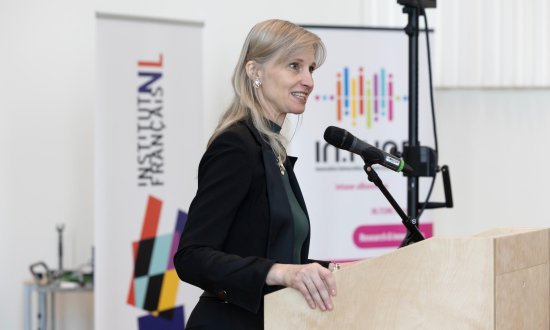
Reflecting on this development, Lies Colman stated in her opening address: “Virtual mobility, hybrid formats, and digital collaboration have become essential components. They complement traditional exchanges, but also stand on their own as meaningful learning opportunities. They allow more people to participate, regardless of their physical location, and they create new possibilities for teaching, learning, and collaboration.”Photo: Isabelle Reuser, Institut français NL