Don't Forget the "A": IN.TUNE Makes the Case for STEAM at European Universities Coordinators working retreat in Brussels
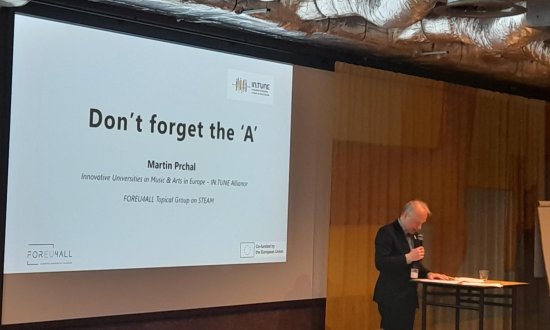
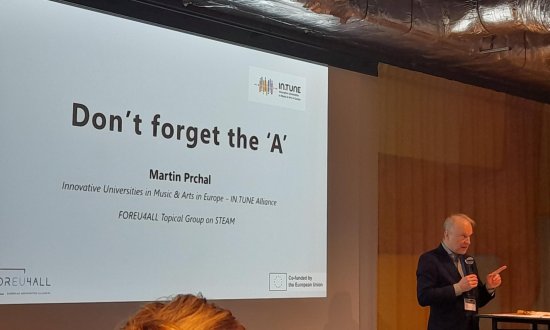
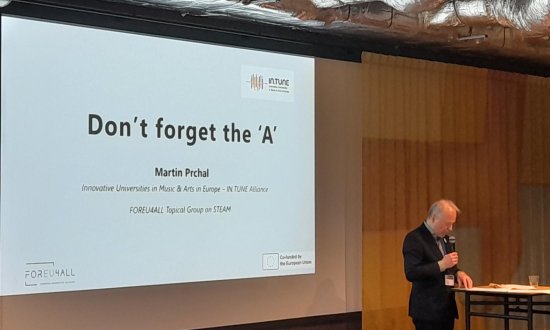


As Europe accelerates its push for STEM talent and technical skills, IN.TUNE's Co-Secretary General Martin Prchal argues that the arts shouldn't be a luxury add-on — they are a strategic asset. Read on to find out what he said, and why it matters for the future of European higher education.
A Retreat Shaping the Future of European Universities
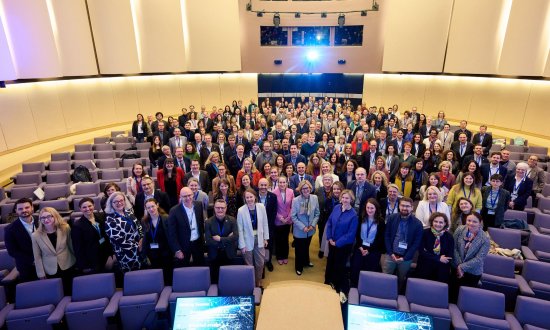
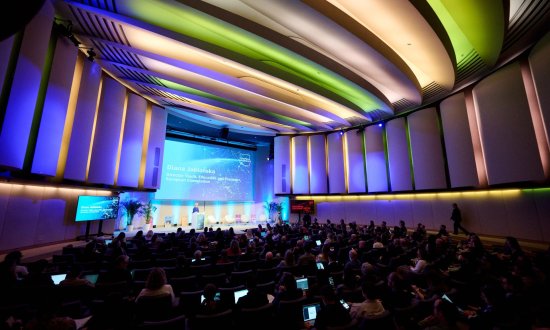
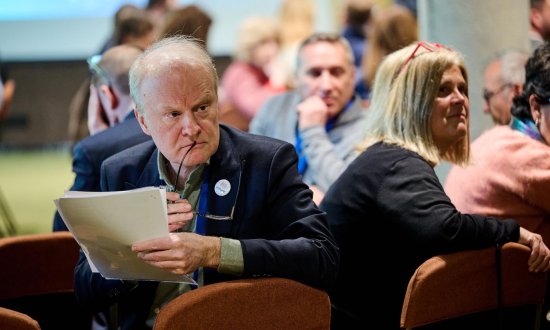
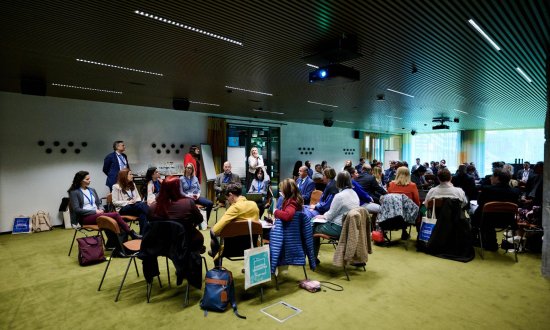
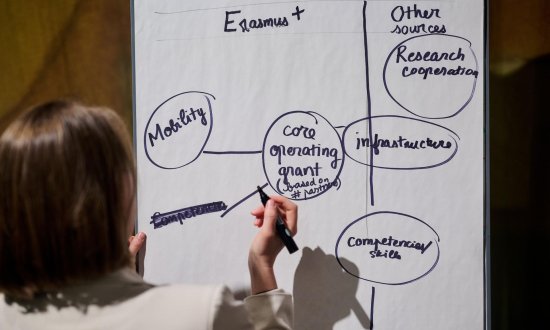
On 14 April 2026, Brussels hosted the European Universities Alliances Coordinators' Working Retreat – a full-day gathering of alliance representatives, European Commission officials, and EACEA stakeholders convened to shape the European Universities Initiative beyond 2027. With the next Multiannual Financial Framework (2028–2034) on the horizon, the stakes were high: participants exchanged views on funding models, institutional transformation, governance, and the alliances' contribution to EU competitiveness.
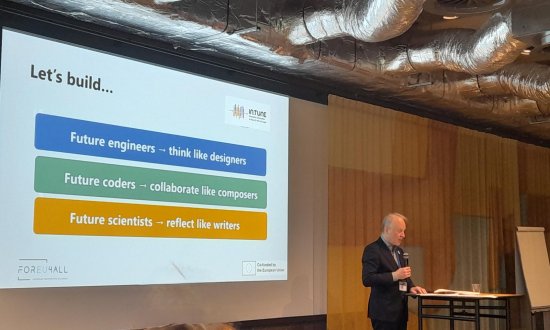
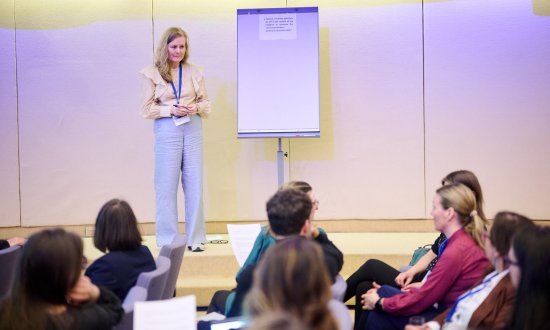
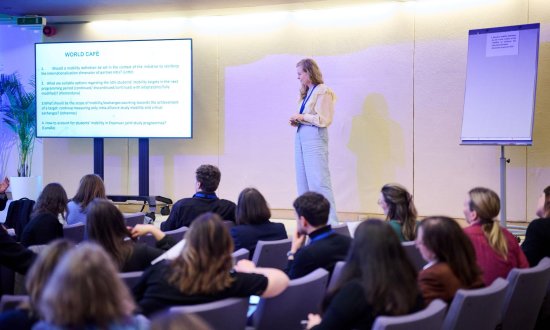
One of the afternoon's breakout sessions – "Alliances' Role in Strategic Sectors for EU Competitiveness" – tackled the challenge head-on. Chaired by Stefan Zotti of the European Commission's Higher Education Unit, it brought together six presenters representing alliances and Commission directorates. Topics ranged from the EU STEM Strategic Education Action Plan and STEM talent retention, to the European Degree in Engineering and neurotechnology. Among them was Martin Prchal, Vice-Principal of the Royal Conservatoire The Hague, speaking on behalf of IN.TUNE Alliance and the STEAM Topical Group within the FOREU4ALL Community of Practice he is co-chairing.
"Don't Forget the A": The Case for Arts in a STEM-Driven Europe
He opened with a simple but pointed appeal: as the EU doubles down on STEM to drive the green and digital transitions, don't let the "A" – for Arts – fall through the cracks.
His argument was not sentimental. In an era of AI systems, ecological tipping points and geopolitical pressure, Europe needs more than people who can compute the right answer. It needs people who can frame the right question, communicate it, test it ethically, and build coalitions around it. The qualities that make a good musician – disciplined practice, iterative refinement, resilience, and the ability to collaborate – are, he argued, precisely the habits that modern STEM work demands too.
Crucially, Prchal was not claiming that the arts "own" creativity or critical thinking. His point was structural: a genuinely transdisciplinary approach unlocks more than any single discipline can deliver alone. Europe's ambition to turn technical skills into real-world innovation depends on graduates who can operate across boundaries – and that is exactly what STEAM education is designed to produce.
Four Families of STEAM Practice Already at Work in European Alliances
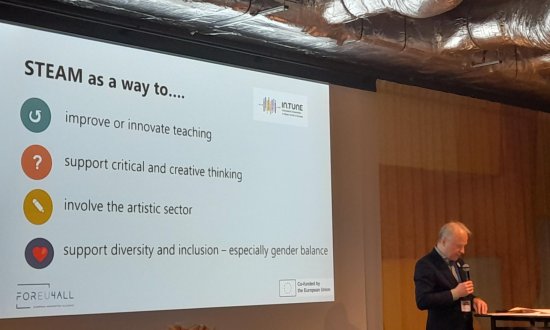
Drawing on the work of the FOREU4All STEAM Topical Group – a cross-alliance body he co-chairs, composed largely of colleagues from technical and medical universities – Prchal presented examples that STEAM is not aspirational: it is already happening, across four distinct identified approaches, in:
- Improving and innovating teaching
- Supporting critical and creative thinking
- Positioning arts institutions as knowledge producers
- Advancing diversity and inclusion.
A Call to Policy Makers and Alliances to Widen the Lens
Prchal closed with three concrete asks directed at the Commission and the broader policy community.
If a European STEAM Executive Panel is established, it should genuinely reflect STEAM – including voices from the arts and humanities alongside business and science. When STEM education centres are funded, partnerships with museums, libraries and cultural associations should be treated as the norm, not the exception; the Commission's own Strategic Plan already points to these ecosystems. And the diversity of institutions matters: small, discipline-focused institutions like conservatoires represent significant economic and cultural sectors. Europe's cultural and creative workforce runs to millions of jobs – and it is part of why students from around the world choose to study here. That, too, is a competitiveness asset.
The vision he left the room with was that of future engineers who think like designers. Future coders who collaborate like composers. Future scientists who reflect like writers. Not STEM instead of STEAM – but STEM expanded into STEAM, to make European education more adaptable, more inclusive, and more future-proof.