New ideas, new creative approaches and new skills: Reflections on the IN.TUNE Blended Intensive Programme “Creating and Producing Immersive Music and Sound for Live Performance”
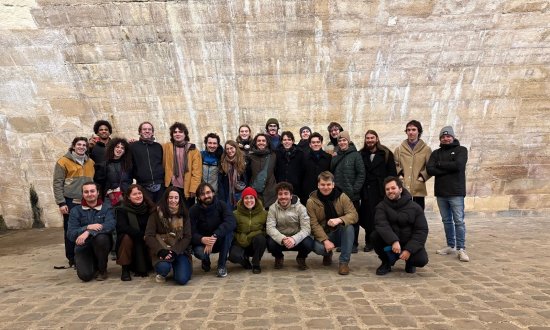
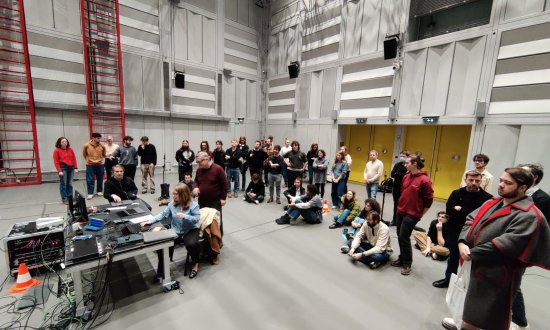
New ideas, new creative approaches and new skills: from 2 to 8 February 2026, Conservatoire de Paris became a creative hub as the IN.TUNE Blended Intensive Programme “Creating and Producing Immersive Music and Sound for Live Performance” gathered students from across Europe to transform international student teamwork into new approaches in sound and music education. Lea Turon and Jonas Reiter from the University of Music and Performing Arts Vienna (mdw) joined fellow students from Paris and The Hague in one of sixteen developing joint educational formats within IN.TUNE. Combining online collaboration with an intensive study visit to Paris, they created original cross-border projects exploring immersive music and spatial sound. In the following text they shared how they experienced international learning, shared expertise and hands-on experience through mobility and teamwork in Paris.
The following article is republished with the kind permission of the authors and mdw. The original article is available at mdw blog
New Impulses for Tonmeister Students
“It was rewarding because it was an encounter of many different approaches. I received a lot of input from the other students,” says Lea Turon, Tonmeister student at the mdw. Along with fellow students from the Tonmeister programme, she participated in a Blended Intensive Programme (BIP) as part of IN.TUNE. The mdw is one of eight renowned universities that make up the first European Universities Alliance in the area of music and art: IN.TUNE (Innovative Universities in Music & Arts in Europe). The work of this alliance revolves around, among other things, shared education provision and mobility. The Blended Intensive Programmes represent a valuable mobility experience: a combination of online courses and physical mobility. In the BIP “Creating and Producing Immersive Music and Sound for Live Performance”, Tonmeister students from three IN.TUNE partner universities – the Conservatoire National Supérieur de Musique et de Danse de Paris, the Royal Conservatoire The Hague, and the mdw – together completed online sessions on the historic, aesthetic, and technical foundations of spatial sound design, taught by instructors from the Conservatoire Paris. This was followed by a weeklong visit to the Conservatoire in Paris in February 2026.
Collaboration, Challenge, and Experimentation in Spatial Sound
An important element of the programme was the creative work process executed jointly by the students. A half year before the session in Paris, groups of three – made up of one student each from Paris, The Hague, and Vienna – were formed to develop their own sound project. “It was demanding, of course, because the working language was English, but also because we had to fit the digital meetings into our busy schedule. You learn how to collaborate transnationally with fellow students you have never met before,” says Lea Turon. In Paris, the projects were tried out and finished in various sound-engineering setups. Dealing with group dynamics was very instructive for the students. As Jonas Reiter, a participating student from the mdw, remarks: “The international teamwork with other Tonmeister students was very interesting for me. As a Tonmeister, one often works with composers and musicians, but in this case, I worked only with other Tonmeister on a joint project.”
A new element for the mdw students was that they created compositions themselves, which happens rather rarely in their curriculum. The two students observed that the Tonmeister training has a different focus in Paris and The Hague than at the mdw, which was an advantage because it allowed them to learn from the other students.
Sound, Space, and Networking in Paris
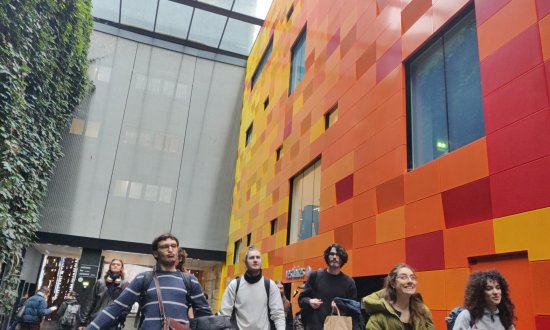
Important items on the programme during the stay in Paris were the excursions to Radio France and to the famous IRCAM, the Institute for Research and Coordination in Acoustics/Music. The two students were very impressed by the institutions’ technical equipment, which in their estimation reflects the high cultural status that sound and music enjoys in France. At the IRCAM, the students were also introduced to a research project by the Artists in Residence. “It was thrilling for me, after seven years in the Tonmeister programme, to hear an acoustic phenomenon I was completely unfamiliar with,” says Reiter with regard to the IRCAM’s innovative position.
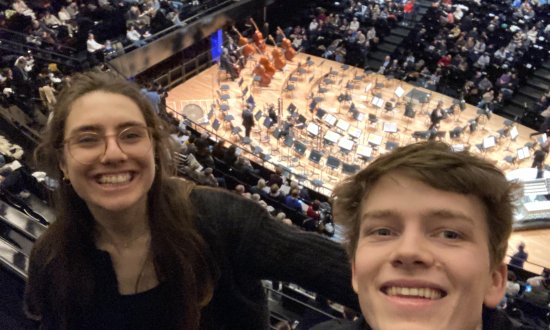
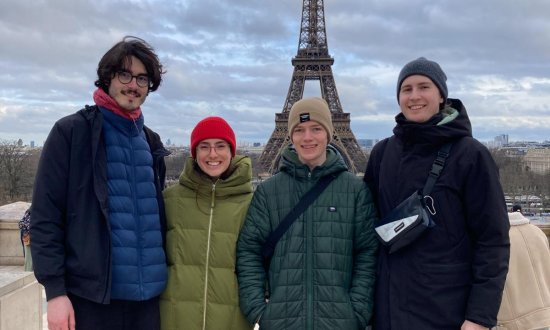
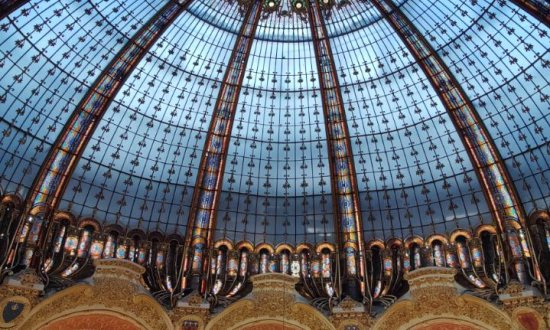
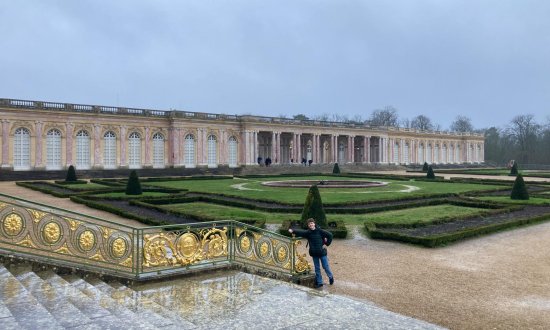
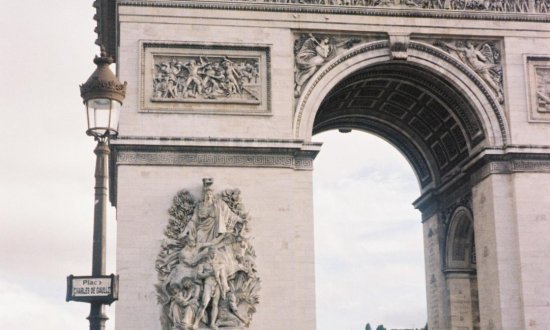
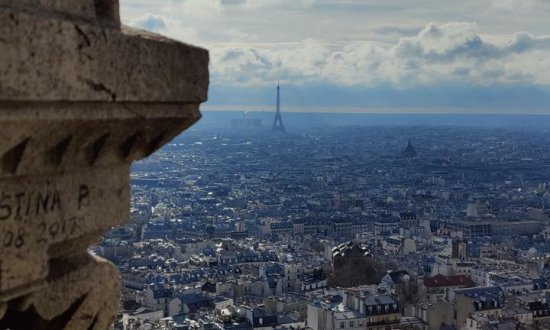
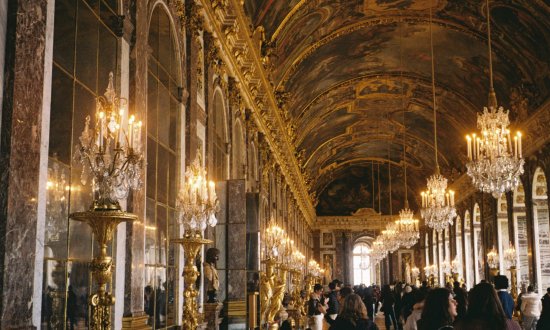
Overall, the students felt well cared for in Paris. “There were always teachers and contact persons there to support us. On our last evening in Paris, they arranged a boat trip on the Seine for us, where we had a view of the illuminated Eiffel Tower,” says Turon. In order to see more of the city and particularly the main sights, such as the Eiffel Tower, the Louvre, and the Palace of Versailles, Turon and Reiter had travelled to Paris in advance. For the two students, no visit to a city would be complete without seeing its famed concert halls. “We visited the Philharmonie de Paris, of course,” says Reiter. “It is important to go into the halls that you learn about in acoustic lectures and experience them for yourself.” “And first of all to take in the acoustics of the space with your eyes closed in order to train your hearing,” adds Turon.
Both students are very open to further experiences abroad, whether in the context of their studies, internships, or jobs. “It is good for your personal development during your studies to get away from your own university. Through IN.TUNE, you become familiar with the situations and conditions in other countries, and you abandon the idea that people work much differently there than at home,” comments Reiter. “In general, it is essential to meet new people and build up an international network,” stresses Turon.
Another BIP for Tonmeister students as part of IN.TUNE is planned for next year at the mdw, which again gives the students the opportunity to expand their knowledge and their networks.
Photo credits: Jonas Reiter, Lea Turon, Nikolaus Schweiger
Text: Isabella Gaisbauer