Playing Better, Feeling Better: A Student Experience from IN.TUNE Vienna Blended Intensive Programme
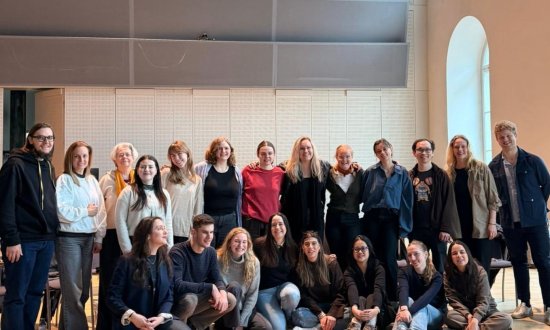
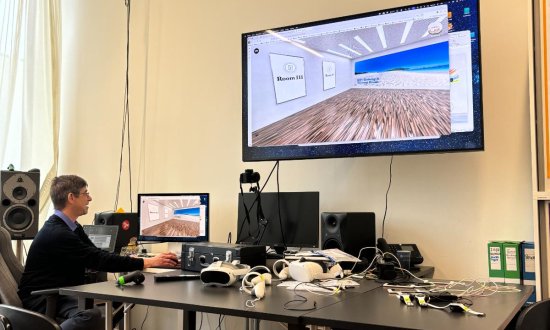
What does it really take to stay healthy as a musician – and perform at your best? Mina Korać and Elena Medić from the Faculty of Music in Belgrade shared their experiences after taking part in the Blended Intensive Programme “Shared Resources for Healthy and Optimal Playing”, one of sixteen developing joint educational formats within IN.TUNE, held from 22 to 27 March 2026 at the University of Music and Performing Arts Vienna. Through hands-on workshops and collaboration with peers from across Europe, they explored the connections between well-being and performance and gained practical tools that extend far beyond the practice room. Read on to discover how this experience is shaping their approach to music and their future as performers.
Programme Overview and Institutional Context
During the period from March 22 to March 27 2026, we had the opportunity to participate in the Blended Intensive Programme “Shared Resources for Healthy and Optimal Playing,” organized within the activities of the university alliance IN.TUNE. The program was held at the University of Music and Performing Arts Vienna (mdw), which hosted students from Vienna, The Hague, Bucharest, Oslo, Freiburg, and Belgrade.
Educational Content and Practical Training in Healthy Music Performance
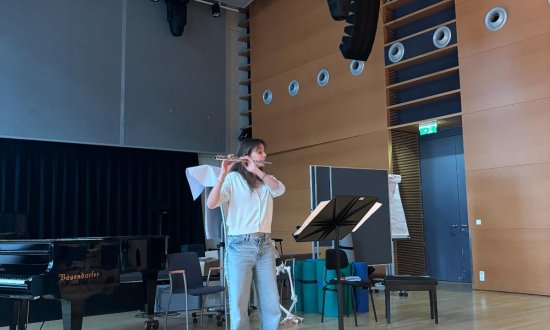
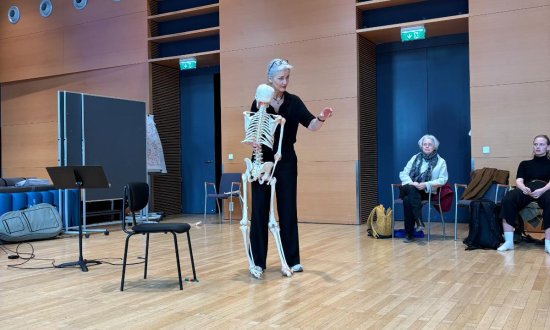
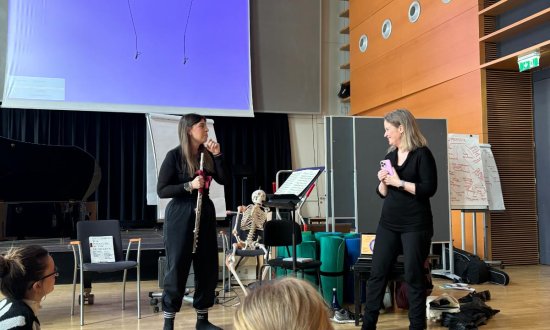
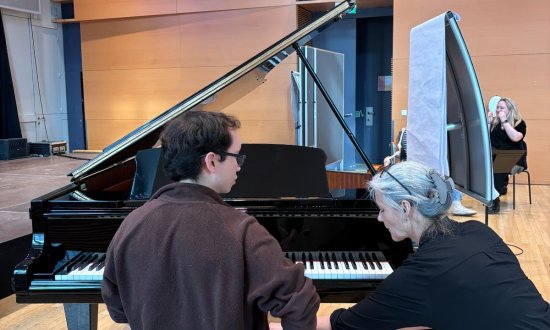
The travel program included participation in an intensive educational course that integrates biological, psychological, physical, and artistic aspects of musical performance. Through a series of workshops, the program focused on developing a healthier approach to practice and performance, injury prevention, and the improvement of musicians’ overall well-being. Special emphasis was placed on mental strategies such as visualization, positive thinking, and a structured approach to work. As part of the program, we were introduced to the basics of the Alexander Technique and the Timani method, as well as their application in building performance confidence. Particular attention was also given to breathing techniques, relaxation, proper posture, mental preparation, and the development of stage confidence. These components enabled us to acquire concrete knowledge and practical tools applicable in everyday artistic practice.
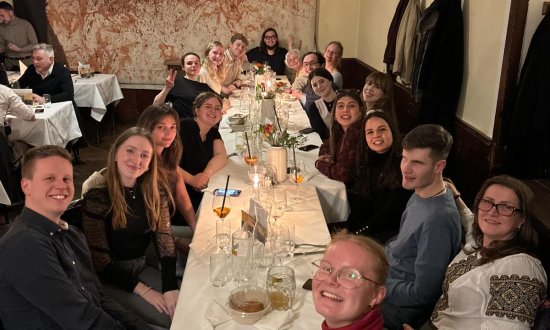
In addition to the theoretical component, the courses included practical application of the acquired knowledge through group work, discussions, exchange of experiences, and direct application on the instrument. A special value of this program was the opportunity to meet and exchange experiences with colleagues who share similar interests and challenges in their work. Conversations, both during and outside the workshops, took place in an open and stimulating atmosphere of mutual respect and professional support, contributing to high-quality communication and a deeper understanding of shared challenges in musical practice. It was precisely this direct exchange of experiences that gave the program its particular value and left a strong personal impression.
Professional Exchange, Outcomes, and Long-Term Impact
Participation in this program further highlighted the importance of health and well-being in musicianship, as well as its broad application across all aspects of the musical profession. This experience significantly contributed to our professional development, as it provided us with concrete knowledge and tools applicable in further education and future artistic practice. The knowledge gained represents an important prerequisite for long-term, stable, and successful artistic activity, while the contacts we established additionally encourage further improvement and professional growth.
Photo and text credits: Mina Korać and Elena Medić